Lesson 4 of 8
Make Movement Feel Alive
Apply squash and stretch, anticipation, easing and follow-through.
Wick Editor studio
Open Wick Editor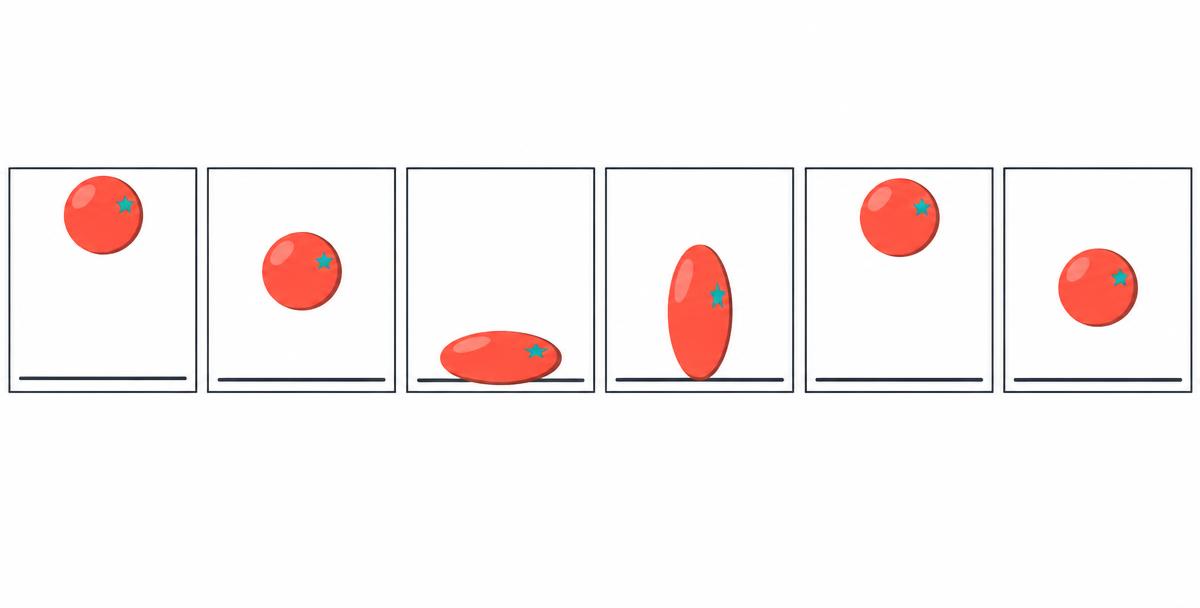
Learn it
Squash and stretch changes shape to show weight or energy. A rubber ball squashes at contact and stretches as it moves quickly. Keep its apparent volume roughly consistent.
Anticipation is a preparation before an action: a character crouches before a jump. Follow-through is movement that continues after the main action, such as a scarf settling.
Easing makes movement speed up or slow down naturally. A strong animation has clear poses and readable timing, not just lots of drawings.
Key terms
- Anticipation
- A preparation that helps the audience read an upcoming action.
- Squash and stretch
- Deformation that communicates weight and flexibility.
- Follow-through
- Secondary motion continuing after the main action.
- Easing
- Gradual acceleration or deceleration.
Make it in Wick Editor
- 1Prepare: Add a crouch or wind-up before the main movement.
- 2Act: Draw clear contact or action poses.
- 3Settle: Add a smaller settling movement afterward.
- 4Compare: Preview the revised and original versions.
Try it
Match the motion to its animation principle.
Challenge
Improve your animation using at least two movement principles. Save a new version and explain what changed and how it affects the viewer’s understanding.
Pick whichever way suits you — every mode earns the same bonus XP.
Write at least 40 more characters to submit.
Mark your own work
Guided walkthrough — 0/2 clues revealed
- Clue 1 locked — reveal it only if you get stuck.
- Clue 2 locked — reveal it only if you get stuck.
Each clue costs 4 XP (never below 18 XP). You'd earn 35 XP right now.